

Apple is preparing for an unusual March product rollout that could reshape how the company announces mid-cycle hardware updates. Instead of a traditional keynote or a quiet press release cycle, Apple has invited members of the press to a simultaneous “special Apple Experience” event taking place on March 4 in New York, London, and Shanghai.
Reports from reliable industry insiders, including Mark Gurman, suggest the company may unveil new products across multiple days leading up to the in-person media experience.
Here’s a detailed breakdown of the format, expected hardware, and what it could signal about Apple’s 2026 product strategy.
Event Format: No Keynote, Multi-Day Rollout Strategy
Historically, Apple’s March announcements have varied between
- Live-streamed keynote presentations
- Pre-recorded launch videos
- Press release-only product updates
- Closed-door hands-on briefings
This year appears to be different.
Rather than hosting a global streamed event, Apple has invited press to attend physical “experience” sessions—with no embargo attached to the invitation itself. That detail alone is significant, as Apple typically operates under strict NDA protocols.
What Could Happen
Industry reporting indicates Apple may:
- Release new products via press announcements on March 2, 3, and 4
- Publish short promotional videos instead of a full keynote
- Allow press hands-on access to all announced devices on March 4
If accurate, this would mirror Apple’s recent strategy of more modular product launches rather than large, spectacle-driven events. The approach keeps media attention focused across multiple news cycles instead of a single 90-minute presentation.
From a strategy perspective, it also reduces production overhead while maintaining narrative control.
Expected Hardware Announcements
Apple is reportedly preparing one of its broadest non-fall hardware refreshes in years, spanning iPhone, iPad, Mac, and display categories.
Below is a category-by-category breakdown of what may arrive.
iPhone 17e

The rumored iPhone 17e could serve as a mid-cycle refresh positioned below the Pro models but more advanced than previous “SE-style” devices.
Expected Features:
- A19 chip (likely built on a refined 3 nm process)
- Center Stage-enabled front camera
- MagSafe support
- Apple Intelligence compatibility
If accurate, this model would reinforce Apple’s increasing alignment of its entire lineup around on-device AI capability.
Entry-Level iPad (A18)

The base iPad may receive:
- A18 chip upgrade
- Full Apple Intelligence support
This would make AI features more accessible at lower price tiers—a move designed to expand ecosystem lock-in among students and entry-level users.
M4 iPad Air

The iPad Air could adopt the M4 chip, bringing desktop-grade performance to a lighter tablet form factor.
Changes are expected to be largely internal rather than cosmetic.
This refresh continues Apple’s strategy of narrowing the performance gap between iPad Air and entry-level MacBooks.
Mac Lineup Updates
The Mac category appears to be the biggest focus of the rollout.
Budget MacBook (A18 Pro)

A lower-cost MacBook powered by an A18 Pro chip—rather than M-series silicon—would be a notable shift.
Key possibilities:
- Fun color options
- Thin and lightweight chassis
- Lower entry price
- iPad-level silicon performance
If launched, this product could directly compete with Chromebooks in education markets.
M5 MacBook Air

Likely updates:
- M5 chip
- Slight efficiency improvements
- Refreshed color finishes
The MacBook Air remains Apple’s volume laptop, so even incremental upgrades carry ecosystem-wide significance.
MacBook Pro (M5 Pro and M5 Max)

Expected in 14-inch and 16-inch variants, these could feature:
- M5 Pro and M5 Max chips
- Performance-per-watt improvements
- Neural engine upgrades for AI workflows
With growing demand for on-device generative AI tools, the MacBook Pro refresh could focus on ML acceleration gains.
M5 Mac Studio

The Mac Studio may introduce:
- M5 Max configuration
- All-new M5 Ultra chip
An Ultra-tier chip would signal Apple’s continued push into high-performance creative and AI workloads traditionally dominated by workstation-class systems.
Display Lineup: Potential Major Upgrade
Studio Display 2

The next-generation Studio Display could include:
- 120Hz ProMotion
- Improved HDR capability
- Upgraded panel technology
This would bring Apple’s standalone monitors closer to its iPad Pro display standards.
Second Mac Display (Possibly Pro Display XDR Successor)
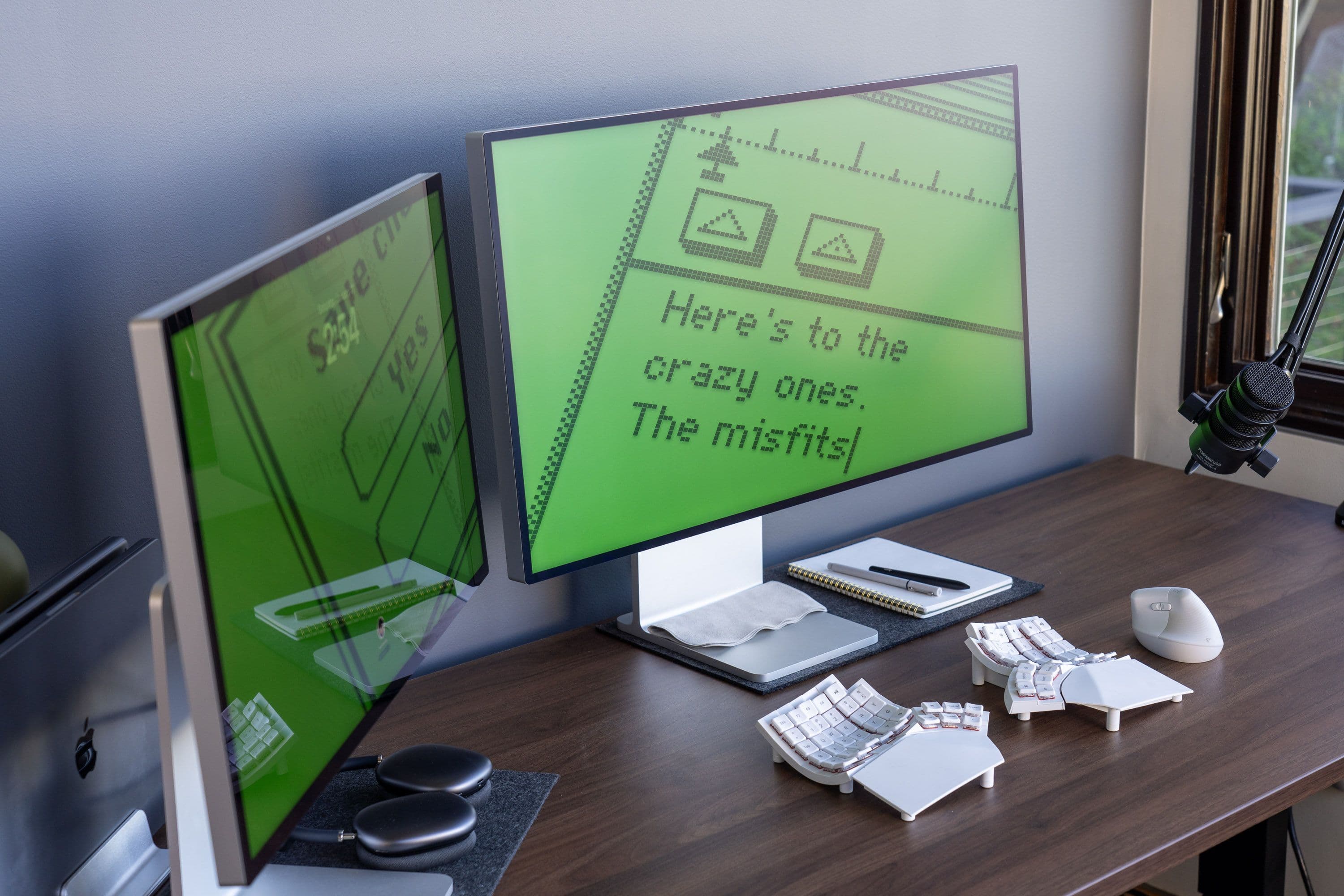
4
Pro Display XDR has not seen a refresh in years. A successor model could:
- Improve peak brightness
- Offer updated panel tech
- Enhance connectivity options
If announced, this would complete a broader professional ecosystem refresh alongside new Mac Studio hardware.
Wildcard Products: Apple’s AI Home Ambitions
Several home-focused devices remain in development but may be delayed due to Siri’s AI overhaul timeline.
Rumored but Uncertain:
- Apple TV 4K with A17 Pro
- HomePod Touch with 7-inch display
- HomePod mini 2 with upgraded chip
These devices are expected to depend heavily on Apple Intelligence advancements and improved Siri capabilities. Given the public delay of certain AI features, early March may be too soon for these launches.
Strategic Analysis: What This Event Really Signals
- AI Everywhere—Almost every expected product upgrade centers around on-device AI capability.
- Silicon Acceleration—The transition from M4 to M5 suggests Apple’s aggressive cadence in custom silicon development.
- Education & Entry Expansion—A low-cost A-series MacBook could open a new volume market.
- Professional Reinforcement—Mac Studio + display refreshes strengthen Apple’s position in creator workflows.
Instead of a single highlight device, this March appears focused on ecosystem reinforcement.
What to Watch Closely
- Whether Apple formalizes the “multi-day launch” approach going forward
- AI feature accessibility across lower-priced devices
- Display tech advancements in standalone monitors
- Any surprise product category entries
March 4 may not deliver a dramatic keynote moment—but it could quietly outline Apple’s roadmap for the rest of the year.
TechJabbers will continue monitoring all official announcements as they roll out across March 2–4.
Stay tuned for live analysis, hardware breakdowns, and performance insights as details become official.




Leave a Reply